శ్రీ నృత్యాలయం
A dance that speaks without words
Rhythm, expression and storytelling held in one form. A school for Kuchipudi, and a place to understand where it comes from.
The invitation
A school for Kuchipudi, and a place to understand it
Sri Nrityalayam was founded by two sisters who have danced Kuchipudi since childhood. It exists for two reasons that are really one reason.
To teach the form properly, to anyone willing to learn it. And to put what we know about Kuchipudi somewhere the world can find it, so that a tradition this old is not left depending on the few people who still carry it.
శ్రీ నృత్యాలయం
What Kuchipudi is
Three things happening at once
Classical Indian dance is built from three elements. A Kuchipudi performance moves between them, sometimes within a single phrase.
-
నృత్తం
Nritta
Pure movement. Rhythm and footwork with no story attached — the body keeping time, and nothing else.
-
నృత్యం
Nritya
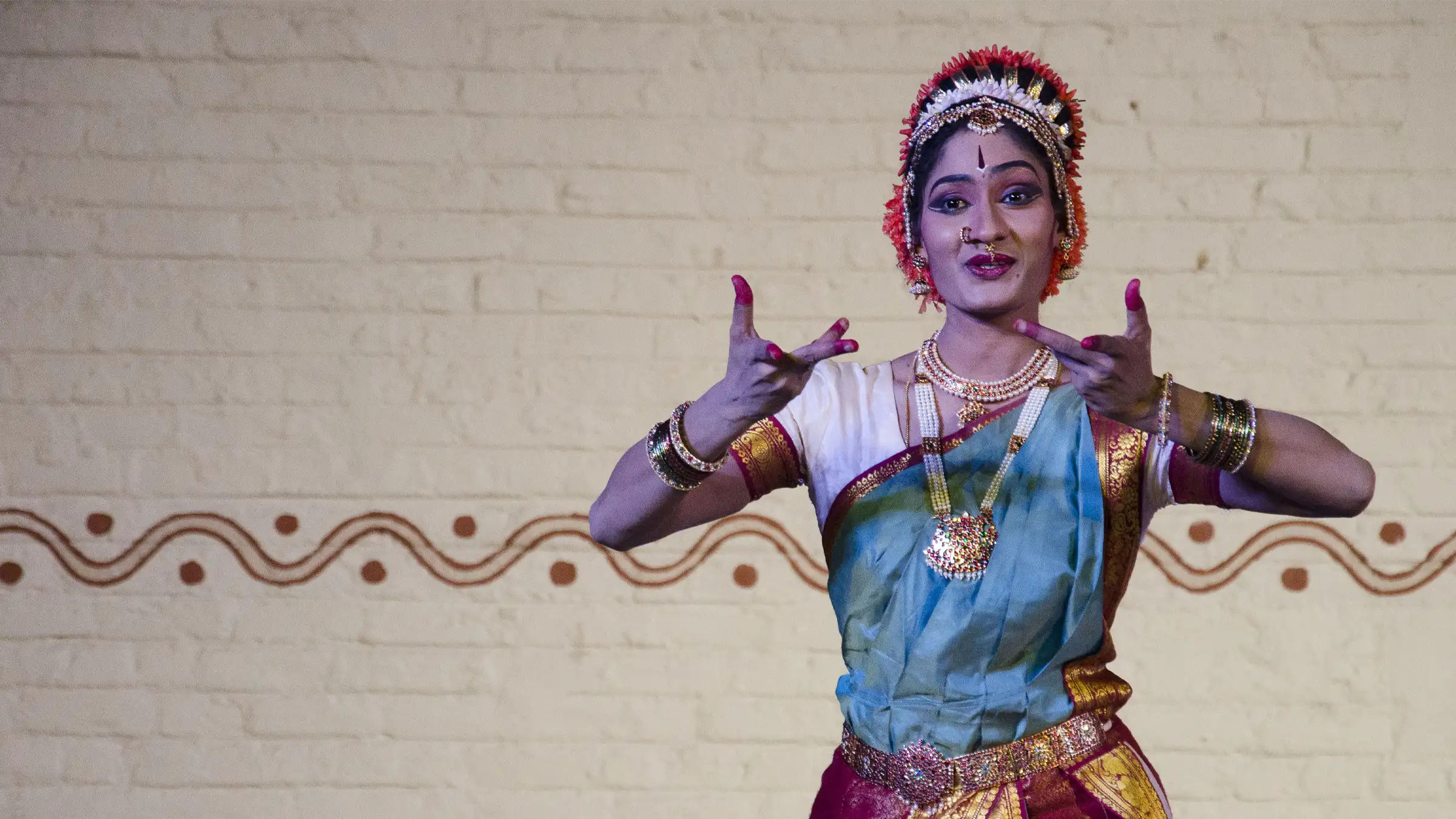
Movement that means something. The hands, the eyes and the face carrying a line of text the music is singing.
-
నాట్యం
Natya
Drama. The dancer stops being a dancer and becomes a character, in an argument, a plea, or a moment of recognition.
The founders
Two sisters, one tradition
They learned Kuchipudi as children and never stopped. Sri Nrityalayam is what they built to carry it forward.
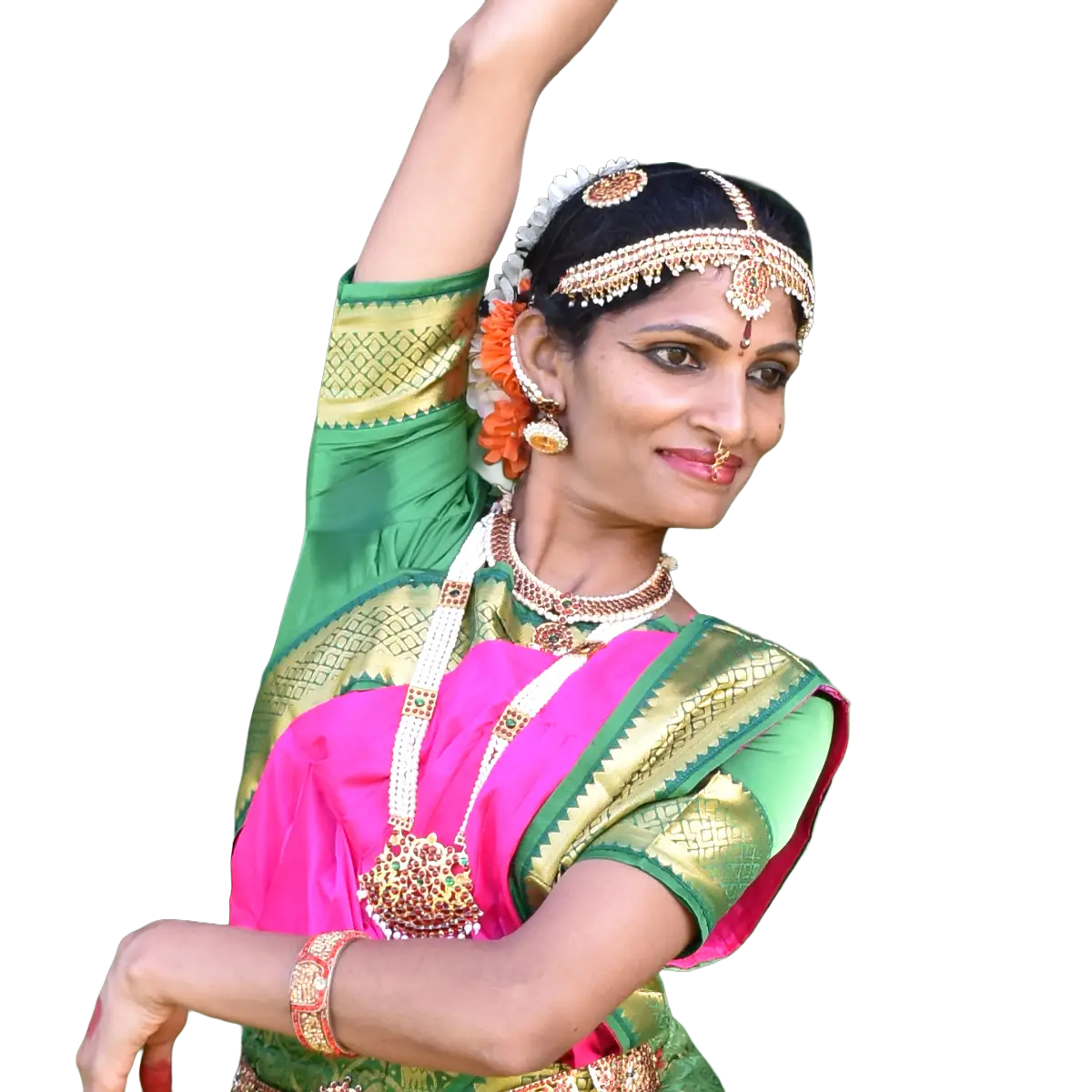
Dr. Sridevi
Founder and teacher
Two or three sentences on her training, her gurus, and what she is known for. Keep it factual. Nothing here should be claimed that she would not say herself.
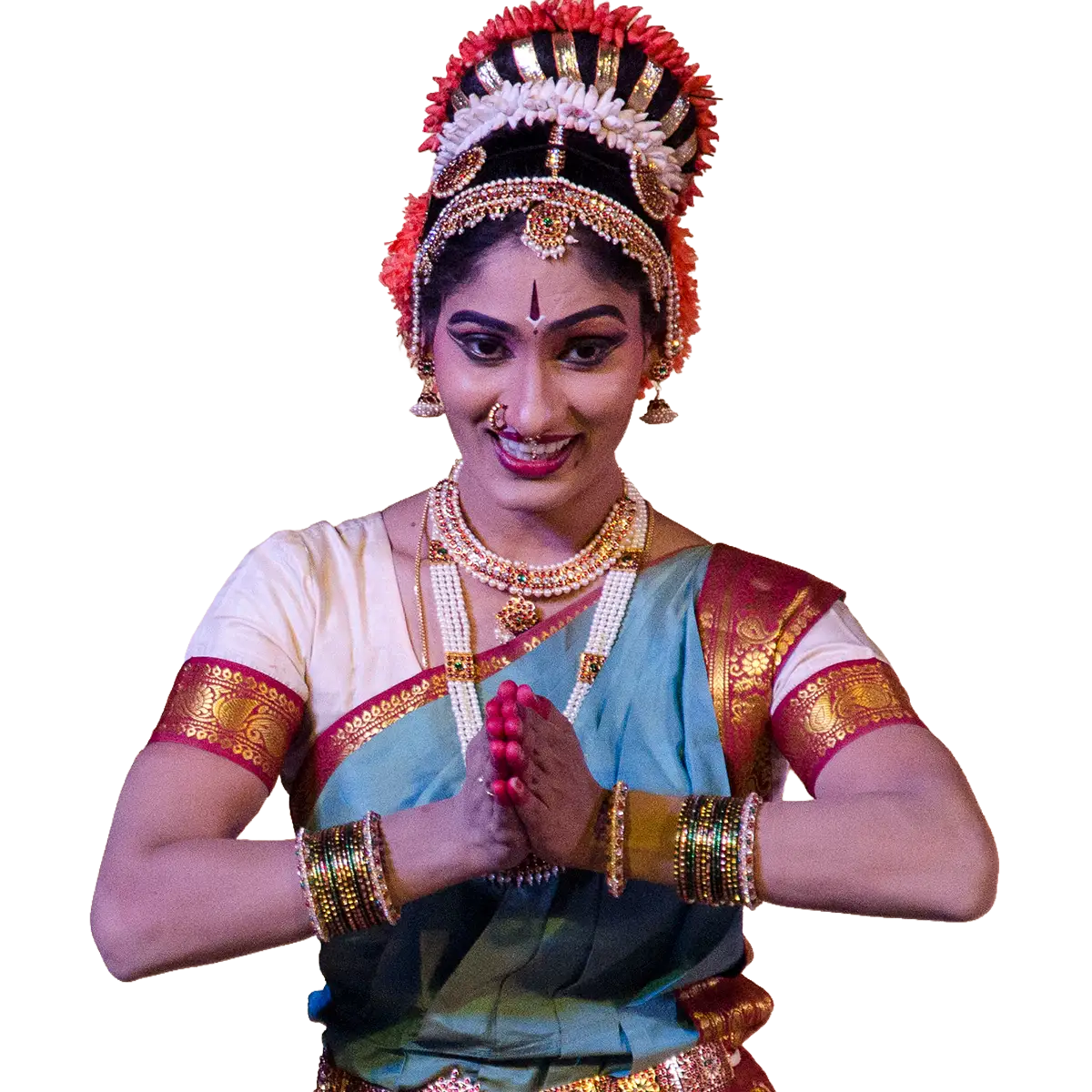
Dr. Srijayanthi
Founder and teacher
The same for her. Two or three sentences, same length as her sister's, so neither reads as the more important one.
The journey of a student
How learning actually goes
-
01
Listen
Before anything moves, the ear has to change. Tala, the beat cycles, the shape of a composition.
-
02
Learn
The vocabulary. Positions, steps, hand gestures - the alphabet before the sentences.
-
03
Practise
The long part. Repetition until the body stops thinking about it and simply knows.
-
04
Express
When technique gets out of the way and something is actually being said.
Where it comes from
కూచిపూడి Nrityam
A village gave the dance its name
The village. Two or three sentences on where Kuchipudi is, what it was, and how a place ended up lending its name to a dance form. Keep it plain. No adjectives doing work that facts should do.
The teacher. Two or three sentences on the figure the tradition traces itself back to, and what he actually changed. If the record is uncertain, say it is uncertain here rather than rounding it up into legend.
The turn. Two or three sentences on how the form moved from its original setting to the stage it is danced on now, and who carried it through the period when it nearly stopped.
From the journal
Writing about the form
One sentence saying what gets written here and who it is for.
DUMMY: 12 September 2026 · Practice
DUMMY: The headline of the first article
DUMMY: Two lines of the opening, or a written summary. Not the first two lines of the post if they read like a throat clear.
DUMMY: 4 September 2026 · History
DUMMY: The headline of the second article
DUMMY: Same length as the others. Uneven excerpts make the row look broken even when the grid is correct.
DUMMY: 27 August 2026 · Repertoire
DUMMY: The headline of the third article
DUMMY: Two lines again. Write these by hand rather than letting WordPress cut them off mid word.
Begin a conversation
Write to us
One or two sentences. Say that classes run in person in Montreal and online everywhere else, and that questions about the form itself are just as welcome as questions about learning it.
The quick way
For a short question, class timings, or to ask whether a level would suit you.
The considered way
For anything longer. Performances, collaborations, press, or a question about the form that deserves a proper answer.
శ్రీ నృత్యాలయం
